Small Living Room? 7 Space-Saving Ideas That Make Every Inch Count
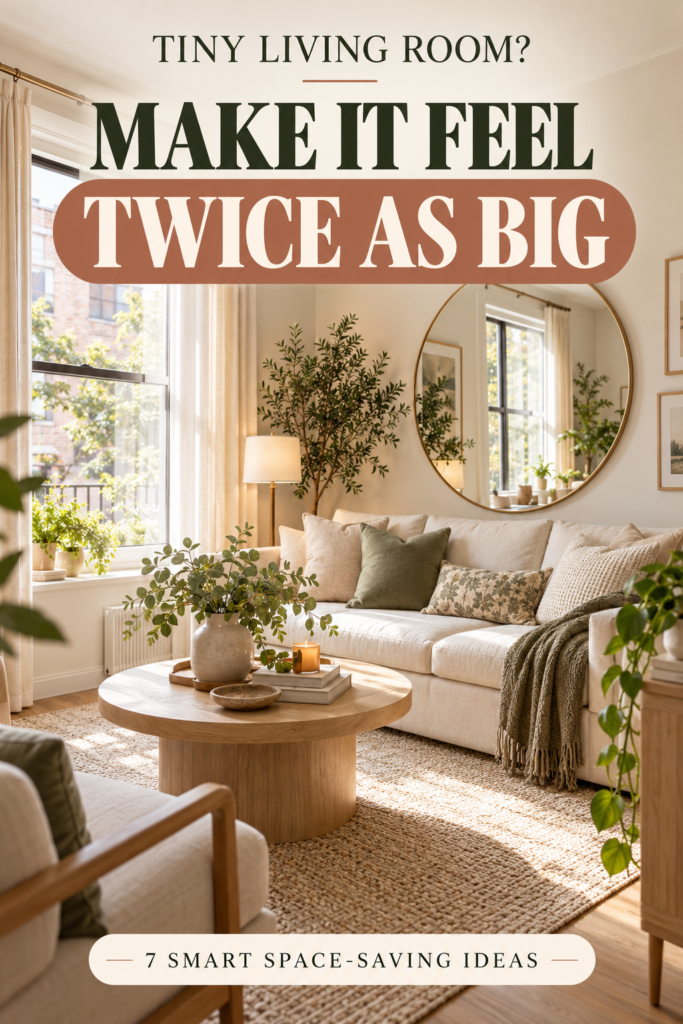
Make a small living room feel more open and organized with seven practical space-saving ideas, from storage ottomans to better lighting.
A small living room can still feel comfortable, stylish, and easy to move around in. The trick is to choose furniture that works harder, use the walls wisely, and leave enough open space for everyday life.
Try these seven practical ideas to make your living room work better without filling it with more stuff.
1. Choose a Storage Ottoman That Works as a Coffee Table
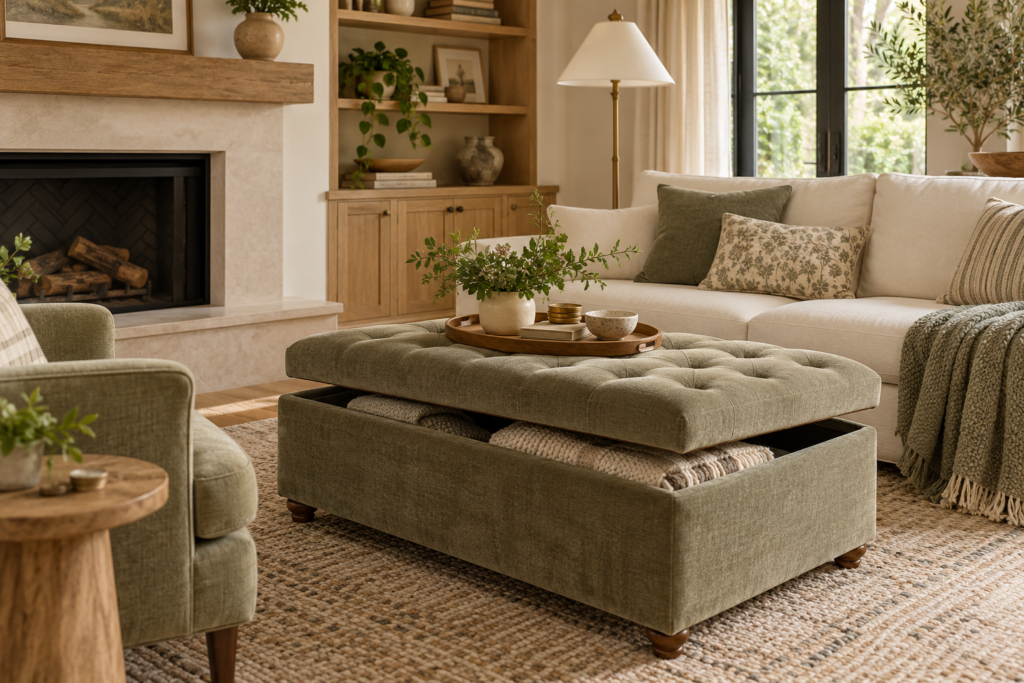
A storage ottoman can serve as a footrest, extra seat, coffee table, and hidden storage. Store blankets, games, or spare cushions inside, then place a tray on top when you need a stable surface for drinks.
Set it up: Choose an ottoman that leaves room to walk around it. A tray helps keep small items together and makes the top more useful.
Avoid: A bulky ottoman that blocks the path between the sofa and the doorway. If the room feels tight, look for one with a smaller footprint or casters.
2. Use a Mirror to Reflect Natural Light
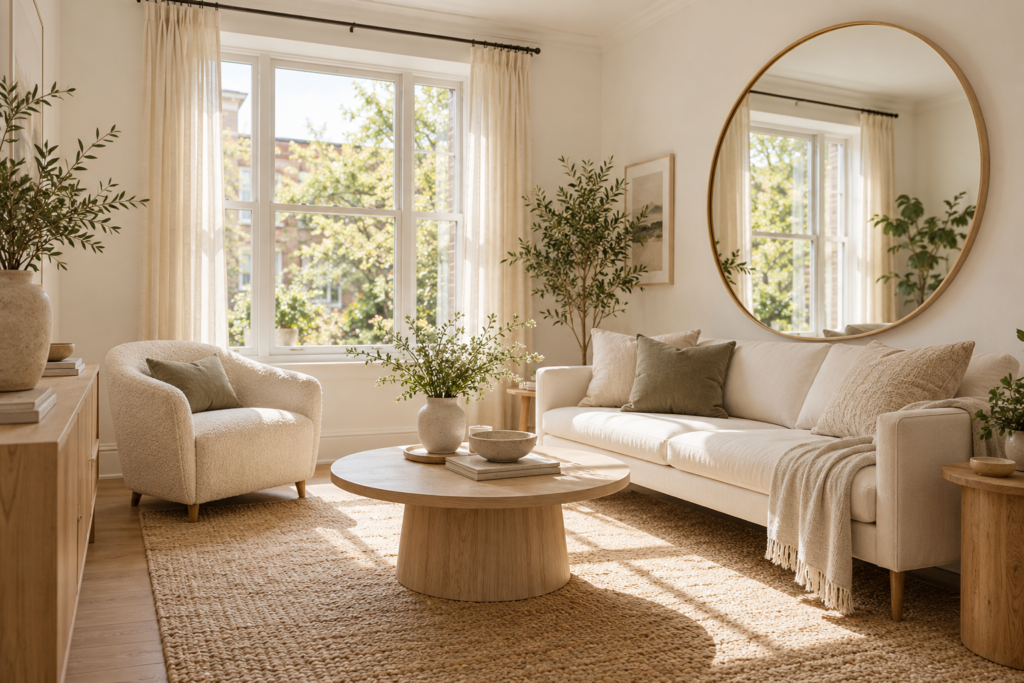
A well-placed mirror can reflect daylight and make a room feel brighter. Try placing one across from or beside a window so it catches light and reflects a pleasant view.
Set it up: Choose a size and frame that suit the wall. Check what the mirror reflects before hanging it—a window, artwork, or greenery can make a lovely focal point.
Avoid: Placing a mirror where it mostly reflects clutter, a blank wall, or glare from a screen. Secure a large or heavy mirror with the right wall fixings.
3. Take Storage Up the Wall
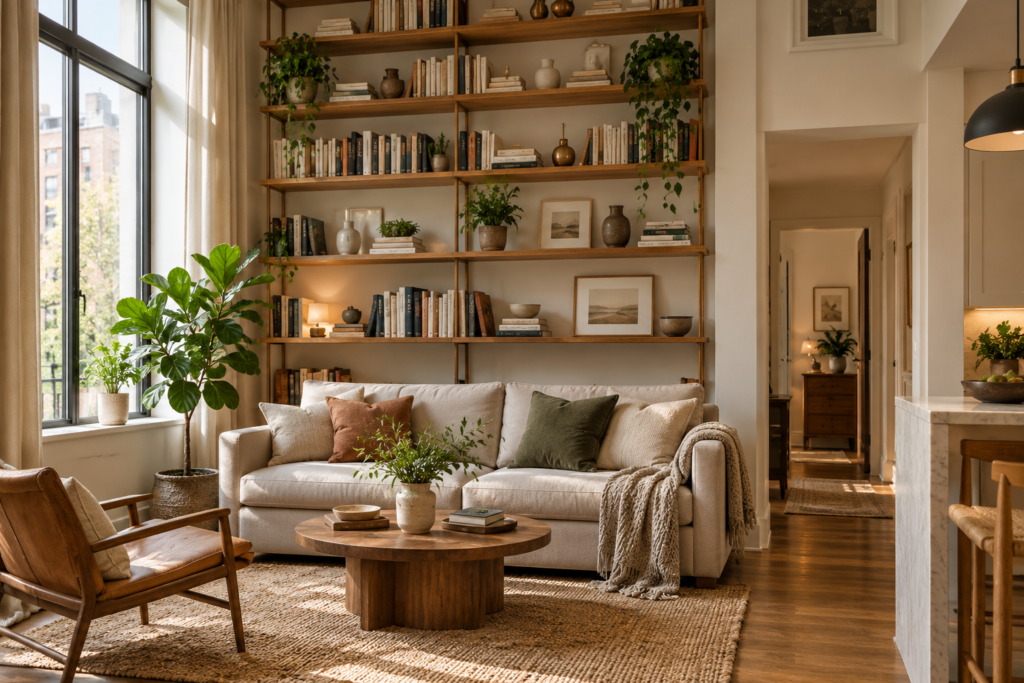
When floor space is limited, use the height of the room. Tall shelves or wall-mounted shelves can hold books, baskets, and a few decorative pieces without adding another cabinet to the floor.
Set it up: Keep everyday items within easy reach. Place heavier items on lower shelves and leave some open space so the shelves don’t look crowded.
Avoid: Overloading shelves or installing them with unsuitable fixings. Follow the shelf maker’s instructions and choose anchors for your wall type; tall furniture and shelves may need to be secured to the wall. USM’s safety guidance explains why correct anchoring and wall assessment matter.
4. Arrange Furniture Around a Clear Walking Path
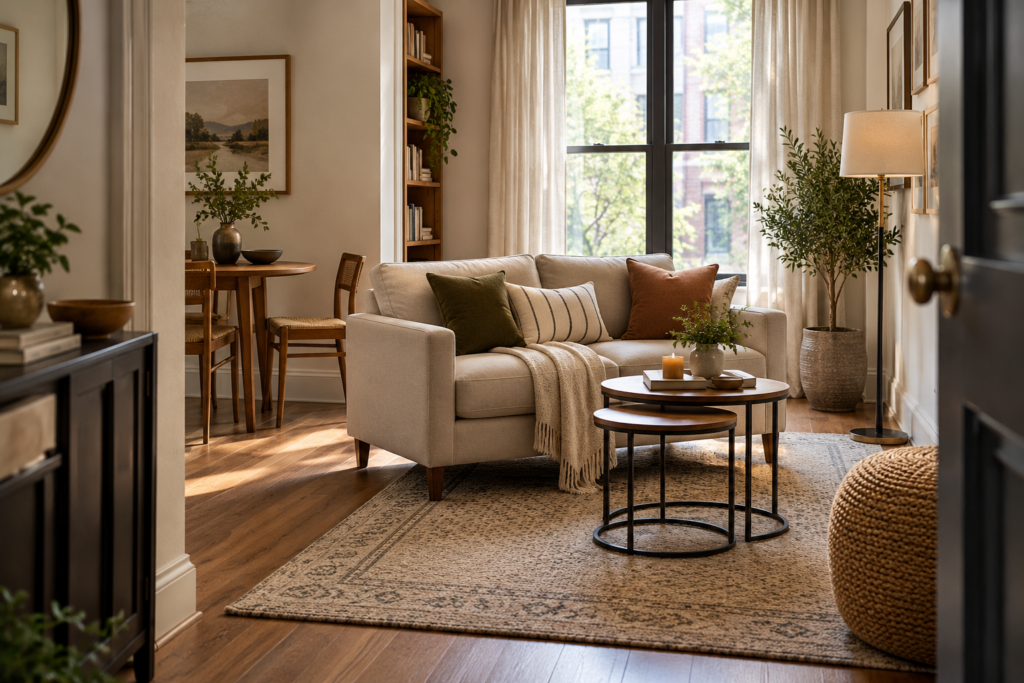
A room can feel cramped even when it has only a few pieces of furniture if the route through it is blocked. Start by identifying the main path between doors, windows, and the seating area, then arrange furniture around it.
Set it up: Leave about 14–18 inches (36–46 cm) between the sofa and coffee table when possible. Aim for roughly 30–36 inches (76–91 cm) for a main walkway where your room allows. These are useful targets, not rules—your layout should fit the room and the people using it. Homes & Gardens
Avoid: Putting a table, chair, or floor lamp where people naturally walk. If the room is narrow, try nesting tables that can tuck away when you need more space.
5. Pick Compact Seating with an Open Shape
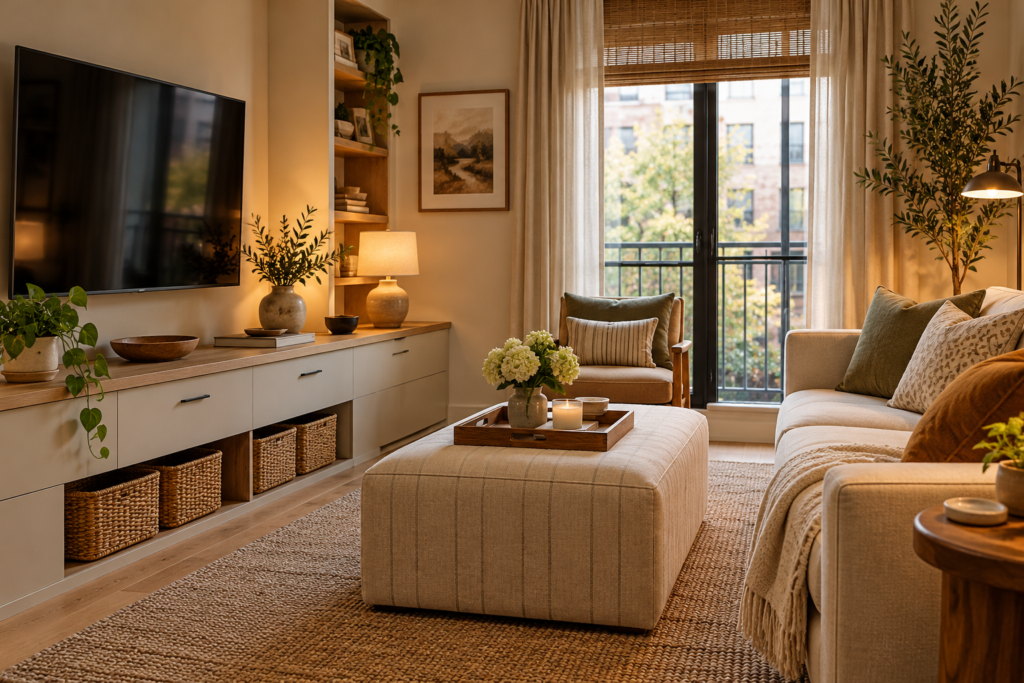
A compact loveseat and one movable chair may suit a small room better than an oversized sectional. Furniture with slim arms, raised legs, or a lighter visual shape can help keep more of the floor visible.
Set it up: Measure the room and check the furniture dimensions before buying. Consider how many people use the room most days, then choose seating for that real need.
Avoid: Buying a large sofa just because it fits along one wall. Check the full footprint, including the space needed to walk past it and open nearby doors or drawers.
6. Hide Everyday Clutter in Closed Storage
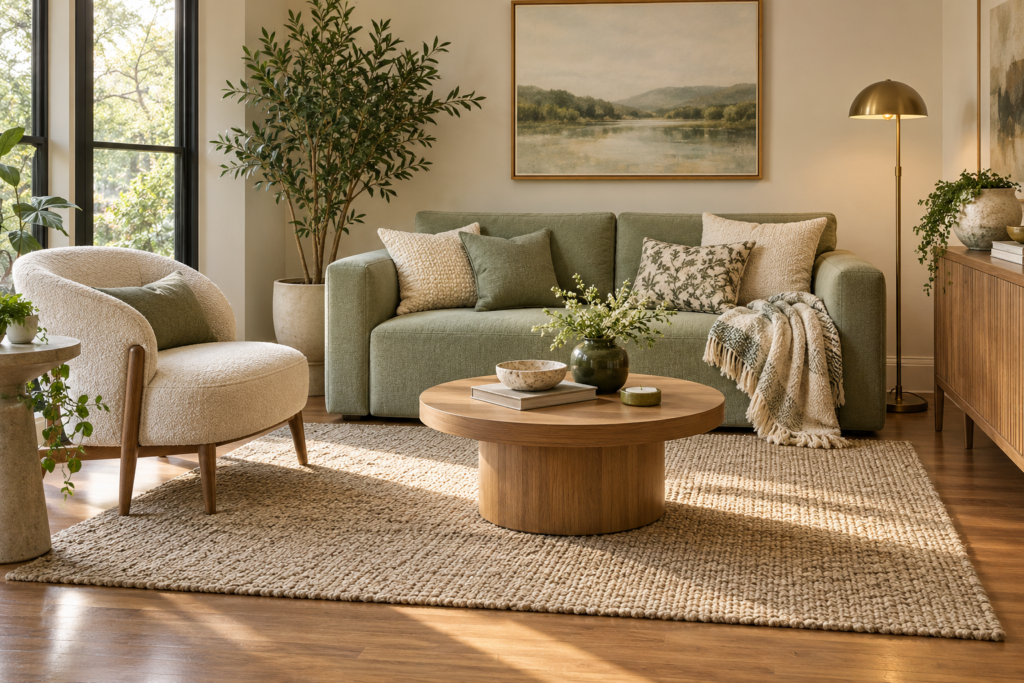
A low media console with drawers or baskets can keep remotes, cables, games, and other everyday items out of sight. Closed storage gives the room a calmer look while keeping useful things close by.
Set it up: Give each drawer or basket a purpose, such as electronics, children’s toys, or blankets. Choose storage that fits under a TV or along an unused wall.
Avoid: Adding multiple small storage units wherever there is a gap. Too many pieces can make the room feel busier and reduce the open floor area.
7. Hang Curtains High and Layer the Lighting
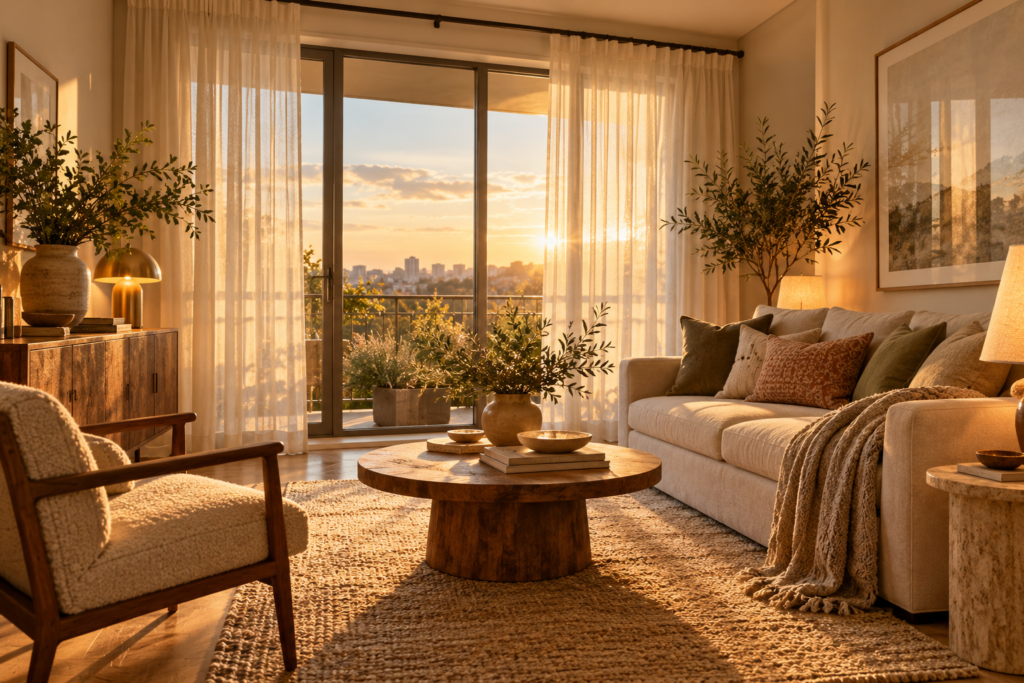
Curtains hung higher than the window frame can draw the eye upward. Sheer panels also let daylight into the room, while lamps add a softer glow after dark. Interior designers often recommend placing the rod above the window trim while making sure it still looks balanced with the wall and ceiling. Livingetc’s curtain guide
Set it up: Use floor-length curtains if they suit the window, and place a reading lamp or table lamp where you actually need light.
Avoid: Short curtains that stop halfway down the wall, heavy fabric that blocks most of the window, or relying on just one bright overhead light.
A small living room doesn’t need a complete makeover to feel better. Start with one useful change—clear a walkway, add hidden storage, or move a mirror to catch the daylight. When each piece has a purpose and the layout suits your routine, even a compact room can feel welcoming and easy to use.